To create a complete collection, Composit relies on the collaboration of prestigious designers who work alongside the Composit Research and Development Center. The result is a range of internationally recognized products, designed for both the residential and contract markets.
Composit collaborates with internationally renowned designers, including Piergiorgio Cazzaniga, Delta Studio, Roberto Lazzeroni, Enrico Cesana, Leone&Mazzari, and Bizzarri Design Associati.
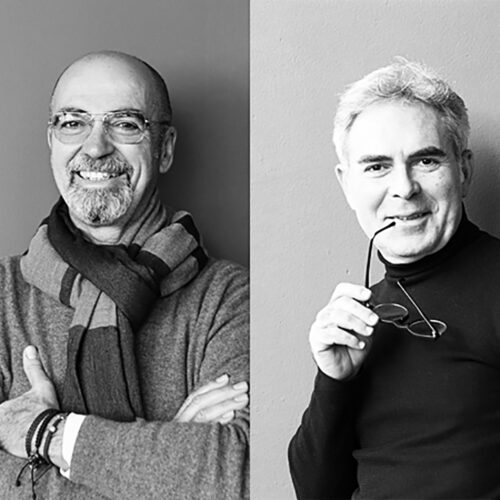
Born from a long journey of experiences in the fields of design, architectural planning, and interior decoration, Bizzarri Design was founded in 1995. The primary goal of Stefano Bizzarri and Claudio Cinti – the two designers behind the Pesaro-based studio – is to bring a fresh approach to industrial and interior design projects. In the same year, the studio began its first collaborations with several companies in the furniture industry and launched the first collections of objects and furnishings for both residential and contract sectors. After designing several collections (Mediterraneo – Biarritz) for the same company, from 1996 to 1998, Bizzarri Design Studio also took on the role of Artistic Direction for Gasparucci Srl (a company specializing in the production of furniture for the home and contract markets). The studio designed showrooms and exhibitions (in Italy and abroad) and coordinated the company’s concept. Since 1999, the studio has been the Artistic Director for Ideal Marmi Italia, collaborating with the ownership on a company-wide restyling process. This process, which started with research and the design of new products, led to the development of a specific identity, enhanced the company’s image, and facilitated the acquisition of new market sectors.
Over the years, Studio Bizzarri Design has had numerous and prestigious collaborations, including with Gasparucci Contract, Pedini, I Conci Srl, Cattelan, Gardesa, Edilcuoghi, Cotto Impruneta, Palazzetti, and Karman, just to name a few. These collaborations have consolidated the studio’s experience, leading to the creation of numerous design products primarily aimed at the furniture sector. In recent years, the studio has also been actively involved in the design of showrooms, villas, and hotels in Italy, Switzerland, Saudi Arabia, and the former Soviet Union. The extensive experience gained from working with materials such as rattan, wicker, wood, stone, metals, glass, and porcelain has allowed the studio to acquire in-depth knowledge of processing techniques and the specific technical qualities of these materials. According to the two partners, design and interior architecture today focus on enhancing the physical characteristics of these materials and the possibility of combining them to create balanced solutions with guaranteed innovative content.
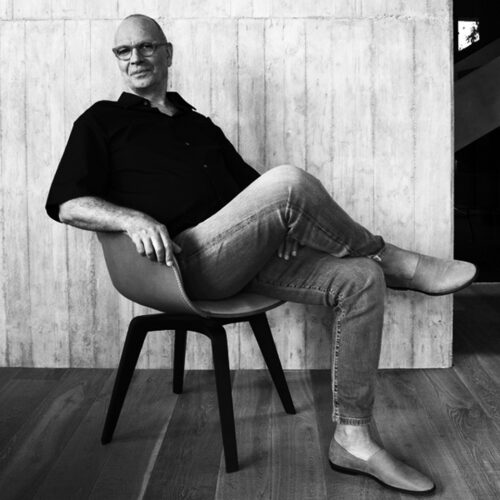
Roberto Lazzeroni was born in Pisa. His professional journey has been strongly influenced by his studies in Art and Architecture in Florence, as well as his interests developed during his formative years, where he became an attentive participant in the phenomena of conceptual art and Radical Design. In the early 1980s, he debuted professionally with a series of significant “Interior Architecture” works, which were quickly noticed and published in both Italian and international magazines.
According to Lazzeroni, “Interior Architecture” is a necessary discipline, a training ground where one can gain diverse experiences with materials, techniques, and the challenges of domestic spaces. This was a fundamental experience for his subsequent approach to product design. Very receptive to the history of design and its symbols, Roberto Lazzeroni has developed a distinctive personal style over time, which he likes to define as “sentimental design”. It is easy to perceive, even for an untrained eye, the tension between past and future that exists in the projects of the Tuscan designer. His design is one that, without the ostentation of industrial geometries or superficial aesthetic flourishes, places objects within a history, a tradition, or an autobiographical or collective memory. This approach to design has led him to specialize in creating true concepts behind the birth of a new brand. His long-standing collaboration with Ceccotti Collezioni, which began in 1988, has now been joined by partnerships with several other companies in the furniture industry. Roberto Lazzeroni’s professional path is highly dynamic, and today he is engaged on various fronts, with prestigious collaborations, art direction, and interior and contract projects around the world.

Piergiorgio Cazzaniga was born in 1946. From 1964 to 1966, he was the Head of the Technical Department at Besana Mobili, gaining firsthand experience in the production cycle and industrial techniques of furniture manufacturing. In 1971, he became a partner at the design studio Buttura, Massoni, Pellizza, which later evolved into “A&D”. Together with Luigi Massoni, he designed products, stands, showrooms, and installations for some of the most important Italian companies, including Poltrona Frau, Nazareno Gabrielli, Iter Selenova, Cadel, Porro, and Matteograssi.
After the dissolution of the “A&D” studio (1991), he founded his own design studio, “PIERGIORGIO CAZZANIGA DESIGN” in Lentate sul Seveso, working with companies such as Porro, Composit, Atlantis, Living Divani, Liv’it, Dema, Tagliabue, Acerbis International, MDF Italia, La Palma, and Tribù. In 1995, he won the “Chair of the Year” award at Promosedia with the MARIPOSA chair and also received an “Honorable Mention” at BIO 15 in Ljubljana. In 2001, the BLOOM armchair from Living Divani was selected for the first edition of I-Dot. In 2004, the M1 chair and LOFTY chair from MDF Italia were selected for the second edition of I-Dot. That same year, the “MEDIUM LIPS” armchair won the “Good Design Award” from the Chicago Athenaeum of Design. Among his significant recognitions are awards from the “Interior Innovation Awards” in Cologne, where the “Inside” modular furniture system won “Best System Category” in 2006, and the “BORA BORA” modular sofa system from MDF Italia was nominated in 2008. Among his most recent projects are the “MAXIMA” and “FREE” kitchens for Composit, the “ESSENTIEL” outdoor seating collection for Tribù, and the “SIGN” seating collection and “TENSE” table system for MDF Italia.
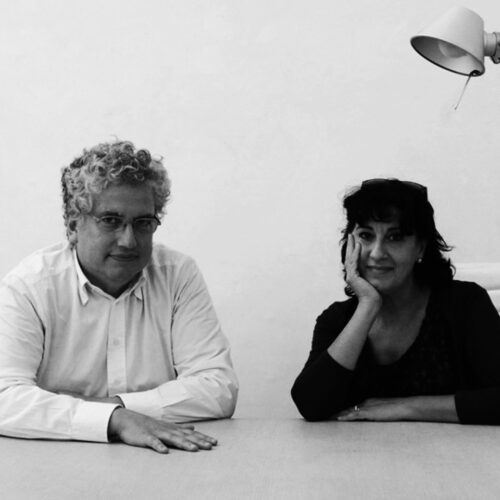
Liliana Leone and Luca Mazzari graduated in architecture from the University of Genoa, where they still live and work. In 1988, they founded their design workshop, Archifax Architetti Associati, and began collaborating with the most important companies in the furniture industry, focusing from the outset on the design and setup of public spaces and their communication. They designed furniture for top design companies such as Move, Berloni, La Falegnami, Ciat, Fimes, Laurameroni, Nardi, Composit, Lema, Ferlea, Novamobili, and Snaidero (for which they designed the Los Angeles showroom). They were also involved in organizing and setting up major design fairs such as the Milan Salone del Mobile, Paris, Cologne, and Moscow, creating stands and production spaces. In 1995, at the international design competition “Young & Design” organized by the Milan Salone del Mobile, they received a special mention for their “Altomare” bed project for Fimes. In 1998, they were invited to participate in the First Design Biennale in Saint Etienne, presenting prototypes of containers and beds produced for “La Falegnami”. In 2004, they won the international competition to redesign the Sedia Chiavarina, and in 2006, with the “Led_Runner” lamp, they won the international competition held by the Belgian company “Deltalight” for a new concept of led lighting. They also teach at the Faculty of Architecture in Genoa, where they hold courses and workshops on design and communication.
Liliana Leone and Luca Mazzari graduated in architecture from the University of Genoa, where they still live and work. In 1988, they founded their design workshop, Archifax Architetti Associati, and began collaborating with the most important companies in the furniture industry, focusing from the outset on the design and setup of public spaces and their communication. They designed furniture for top design companies such as Move, Berloni, La Falegnami, Ciat, Fimes, Laurameroni, Nardi, Composit, Lema, Ferlea, Novamobili, and Snaidero (for which they designed the Los Angeles showroom). They were also involved in organizing and setting up major design fairs such as the Milan Salone del Mobile, Paris, Cologne, and Moscow, creating stands and production spaces. In 1995, at the international design competition “Young & Design” organized by the Milan Salone del Mobile, they received a special mention for their “Altomare” bed project for Fimes. In 1998, they were invited to participate in the First Design Biennale in Saint Etienne, presenting prototypes of containers and beds produced for “La Falegnami”. In 2004, they won the international competition to redesign the Sedia Chiavarina, and in 2006, with the “Led_Runner” lamp, they won the international competition held by the Belgian company “Deltalight” for a new concept of led lighting. They also teach at the Faculty of Architecture in Genoa, where they hold courses and workshops on design and communication.